
Fort Nelson was a neat stop for me. I met two interesting people at the Visitor Center at Mile Marker 300 who knew everything about the area. What would we do without these passionate people who work in the Visitor Centers across the U.S. and Canada? Across the street was the Fort Nelson Heritage Museum, a must stop. Authentic period homes, fully furnished, and an incredible exhibit of old cars.
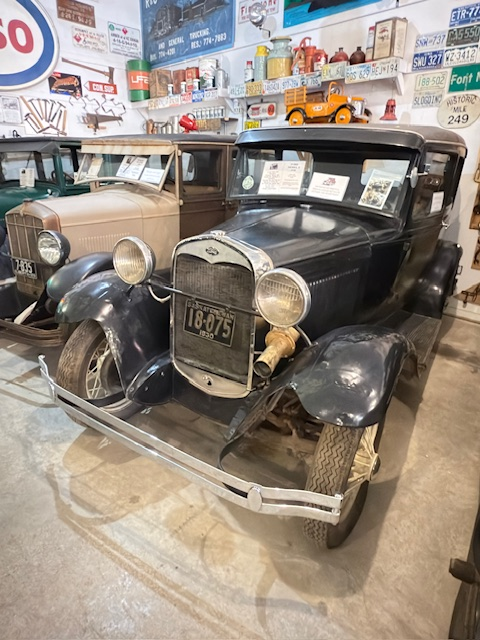
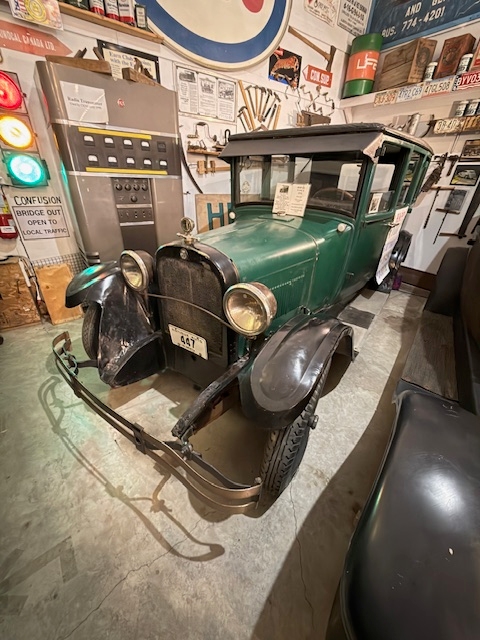
Driving from Fort Nelson to Lake Muncho in British Columbia, I decided to stop by the Tetsa River Lodge and Campground, located at historic mile marker 375. Cinnamon rolls are a known weakness, and the Andrews family have had three generations to perfect their recipe as well as their meats, all made by hand on the premises. It proved to be the perfect break.
But immediately after visiting this lodge, I was so happy that I was driving slowly because I came upon a mother black bear eating fresh red berries while her three cubs were playing together and trying to climb a quaking aspen tree, common in British Columbia. My photo session was short lived as other campers pulled up behind me. The mother scurried about and convinced the three little ones it was time to move away from the highway.
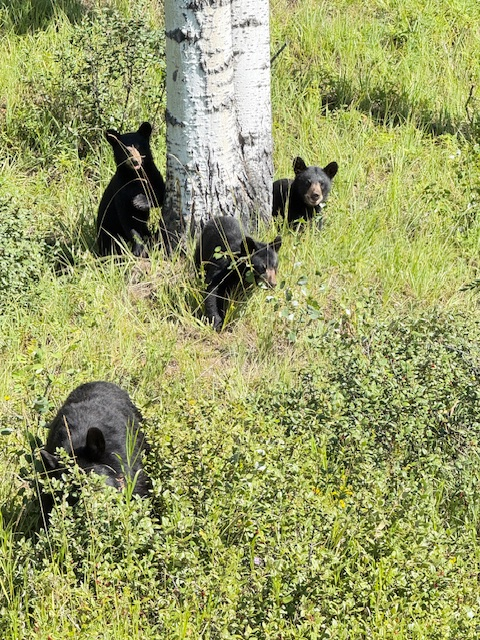
Right after photographing this foursome, I noticed a black mass moving through some tall, thick brush to my left, eating the same type of red berries as the mama black bear. He was quite coy, traveling alone, and stubbornly refused to show any more than 20% of his massive body. He noticed a break in the traffic and sped across the highway behind my van and disappeared into thick brush. He moved very quickly and did not facilitate any photographs due to his camouflage expertise!
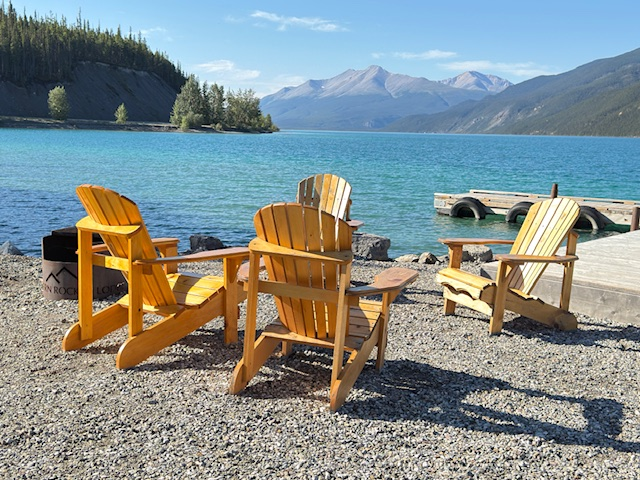
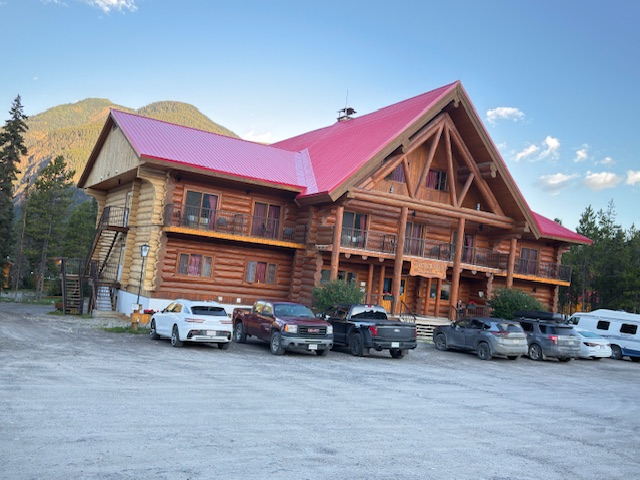
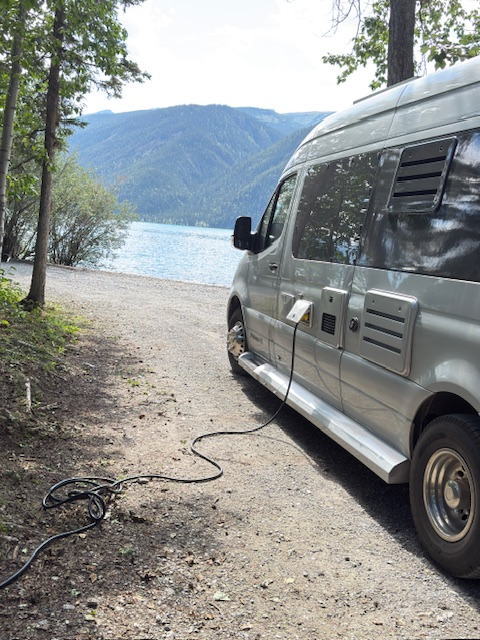
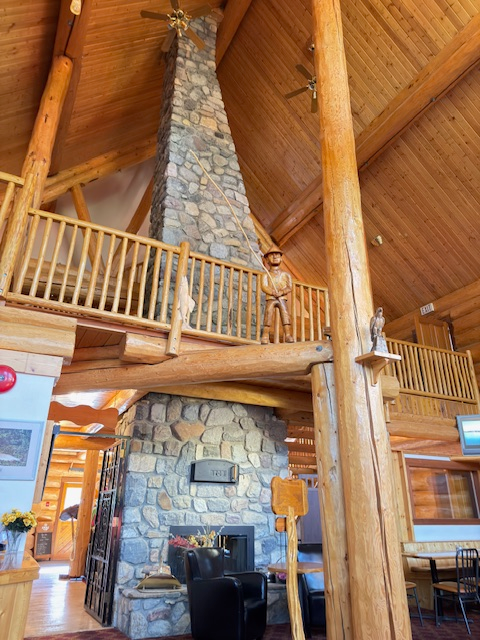
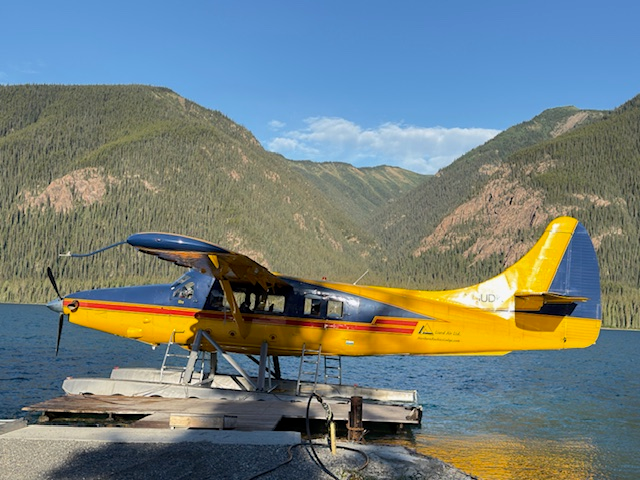
Travelling further west, Muncho Lake (translated from the Kaska Aboriginal name to mean “big water”) was stunning with its deep aqua green colored water. It is 7.5 miles long and striking against the stone-colored mountains upon entry and the deep green boreal forest. When I saw how beautiful it was, I was glad that I had decided to stay at the Northern Rockies Lodge at site #1, a deluxe beach site right on Muncho Lake.
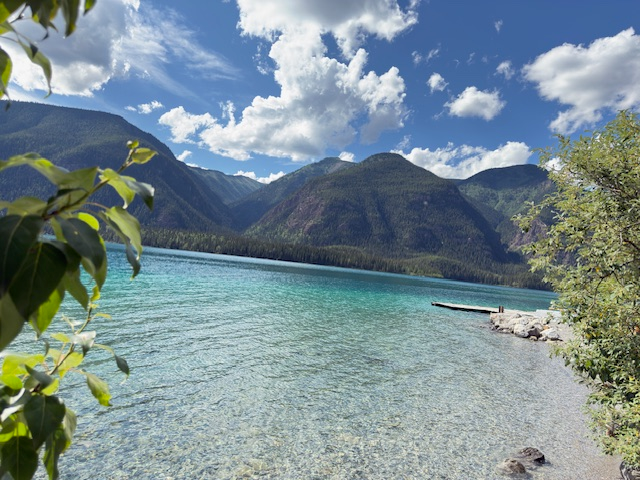
A bright yellow float plane was docked next door!
Just before I turned the corner to the lodge, however, I noticed a small group of stone sheep on the edge of the highway. This was not a safe place for them, so I stopped, put my emergency flashers on, and started photographing them. They are quick and nimble, and it is fascinating to see both the young and old climb uphill. Their movements seemed effortless. I found it impossible to video their uphill strides. It looked like the stately grandmother
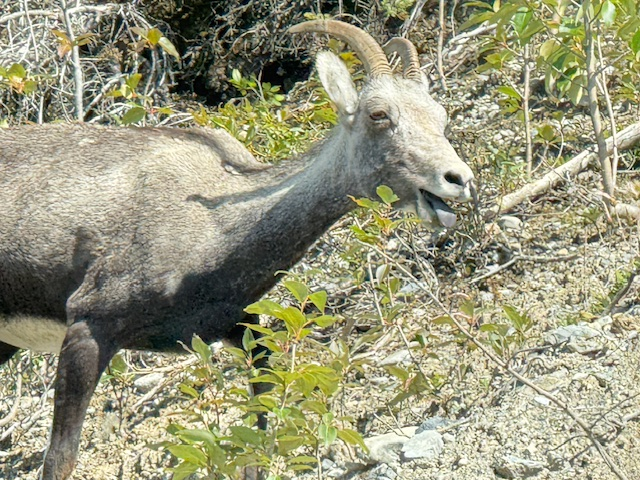
was admonishing them to move uphill quickly to avoid danger. The very young sheep stayed close to their mothers, followed in synchronized steps, and glided up the hill like gazelles.
I did not have time to stop at the Toad River Lodge (Mile #422) on the way to Muncho Lake, but I noticed the Reflection Lake behind the lodge and a pond on the other side. I made a mental note I had to return. That I did the next day. When I asked the server at the restaurant for a BLT, she responded with, “Do you like Moose?” I said, “Not to eat!” She laughingly said, “No, there is a female moose in the lake. You should take a look while I get your sandwich ready.” It took only a few seconds to grab my telephoto and race to the outdoor patio. There she was, up to her neck, as if on a special spa day. She was eating wet, marshy grass, and it was obvious she was ecstatically happy with her lunch! It was a warm day in the 80’s. She was having so much fun, moving as if she owned the lake.
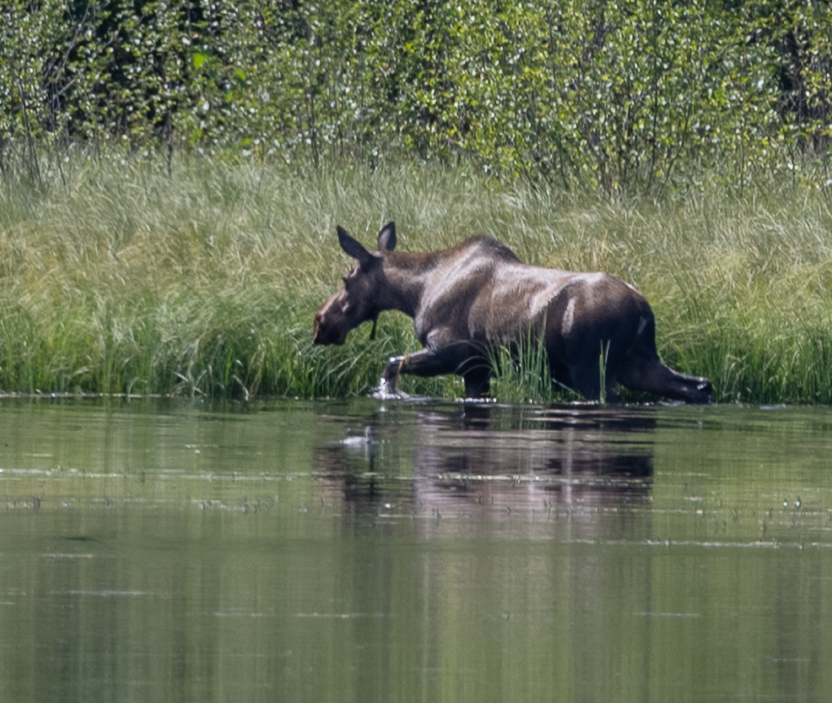
I learned in Jasper that moose can dive and hold their breath, using large nostrils as valves to keep water out. They can dive down 20 feet, and they like eating aquatic plants. She mentioned that if an angry moose is chasing you, you must climb a tree because they can run 30-35 mph and they are excellent swimmers. After taking about one hundred photos, I asked if I could walk around the pond by the campsites. As I got out of my silver Plateau, the campers there saw my telephoto and yelled at me to come quickly. There was a male moose grazing just beyond the pond! Another one hundred photos, and then they called to advise the female moose was stepping out of the water. What a delightful day! Two moose!
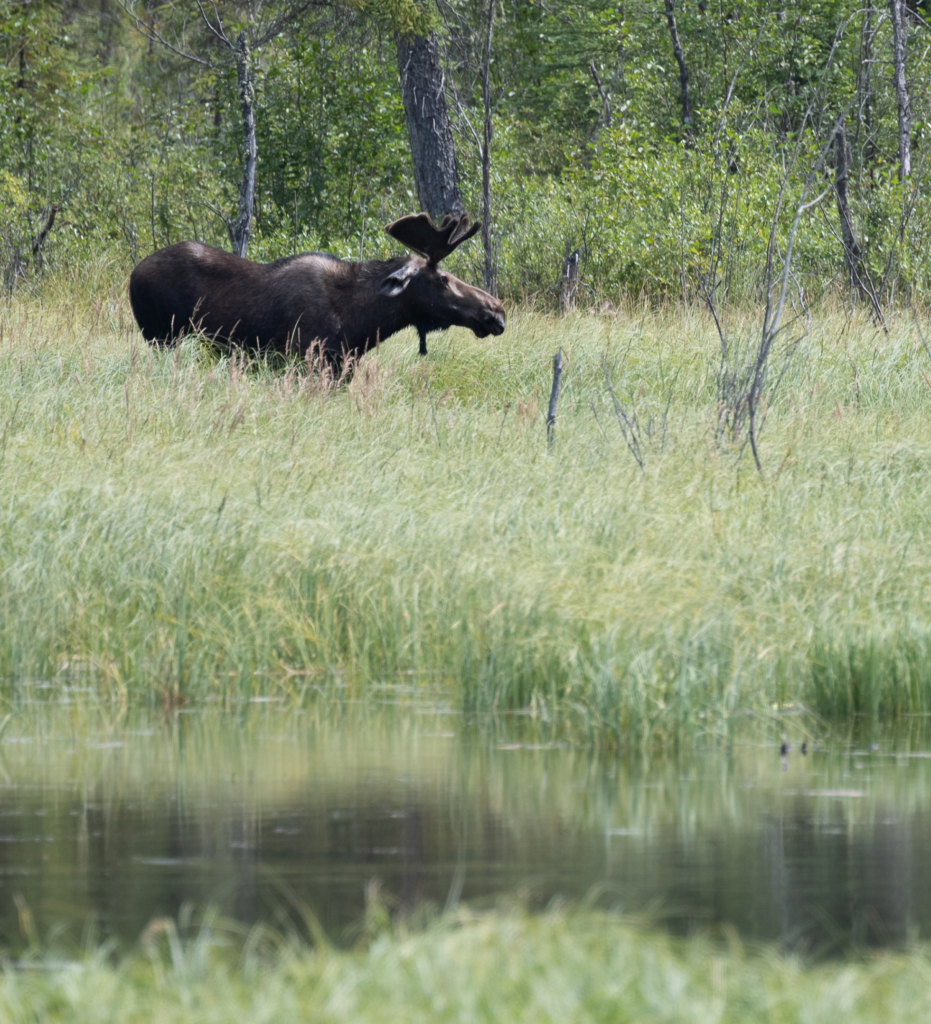
Everyone was so friendly, and I met another camper here who had twice my focal range on her camera. Such a lucky gal and having so much fun photographing these awesome moose. I wholeheartedly recommend camping here one or two nights because the campers noted they saw two females (cows) with their two babies (calves) the day before! These campers wanted to know about my Pleasure-Way van and how I liked traveling in it. They wanted to know what it was like traveling alone. This happens all the time. They were such happy, congenial people.
Before returning to Muncho Lake, there was a Caribou Crossing sign. I thought to myself, “Gosh, I would love to see a caribou.” And then, out of nowhere, on the right side of the road was a very young caribou. It acted like it had gotten separated from others, and was racing around in circles, including on the highway. I immediately pulled over, stopped the motor, and just sat there. The anxious caribou quieted down, stared at me for a few moments, and then quickly darted off into the thick brush. I am so hoping she caught up with her family.
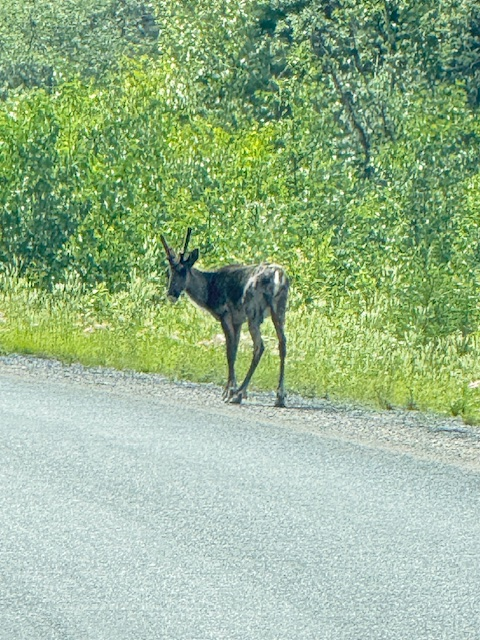
I had the opportunity to visit the Yukon Wildlife Preserve north of Whitehorse. I learned that both male and female caribou grow antlers as opposed to most other species of deer. Male caribou antlers can be fifty-one inches long whereas a female caribou antlers can reach twenty inches. They fall off and grow back every year, covered by velvet to protect the skin and blood vessels as they develop. I got to see a two-year-old reindeer with massive antlers, recovering from an injury at the Yukon Wildlife Preserve.
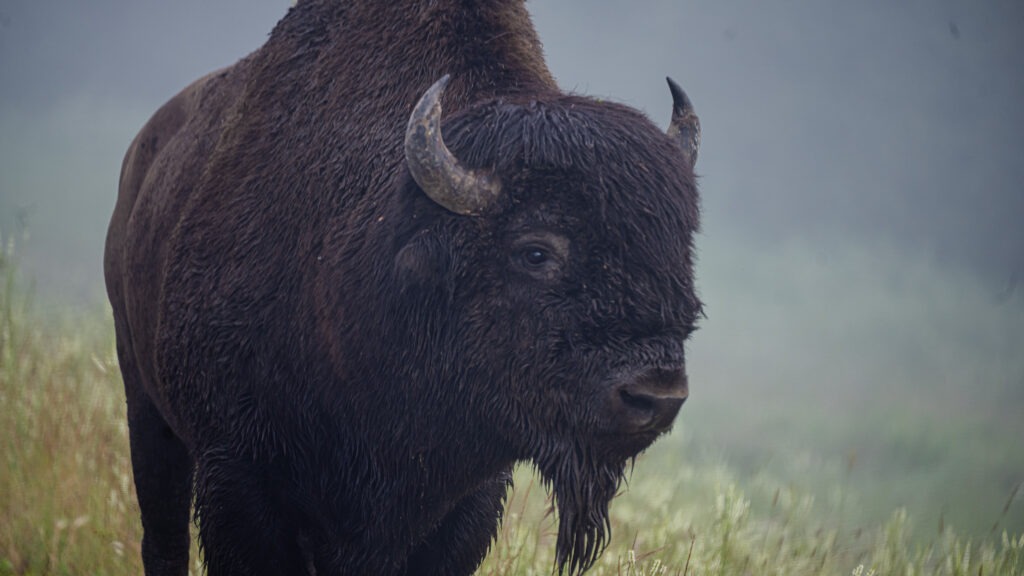
I left early in the morning from Muncho Lake and found myself enveloped in very heavy fog. Just past the hot springs, the wide grazing land on either side of Highway 97 exposed a herd of wood bison, numbering about one hundred. Wood bison differ from plains bison (Yellowstone and Custer State Park) with larger triangular heads, more prominent shoulder humps due to their mountainous habitat, and less head hair. Wolves and grizzly bears are the feared predators. A superb tour guide in Jasper National Park noted that they can jump six feet high and run up to 35 mph. This herd was just west of the Liard River Hot Springs. I stayed on the shoulder of the road with my disaster lights warning truck drivers for more than an hour hoping the heavy ground fog would lift. They were driving approximately 15 mph over the speed limit. I did not like this truly dangerous situation with slow-moving bison crossing the highway.
In Watson Lake, I saw the Sign Forest
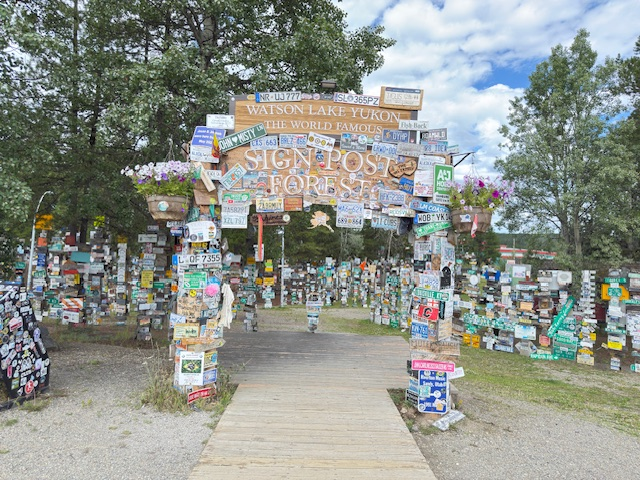
in between rain, rain, rain. The sign forest was started by a soldier, Carl K Lindley, who was recovering from an injury in the Watson Lake area around 1942. He was instructed to install directional signs, so after he finished the job, he installed a sign noting the number of miles to his hometown in Danville, IL. Ever since then, travelers have added their hometown signs! I enjoyed much more visiting the Northern Lights Centre and Visitors Center in Watson Lake.
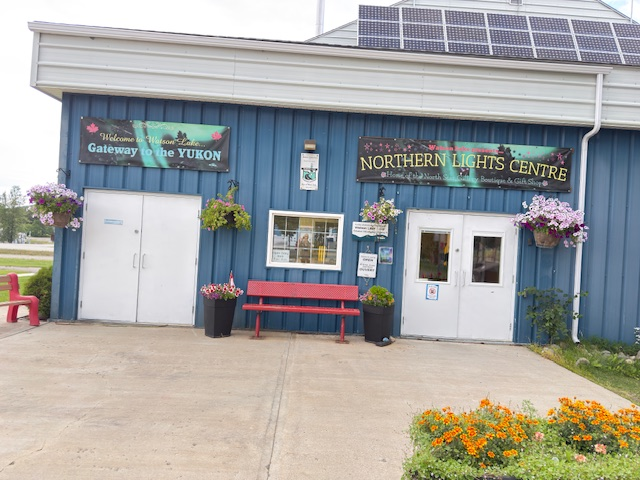
The video about the aurora borealis stimulated me to somehow try to see this on my visit.
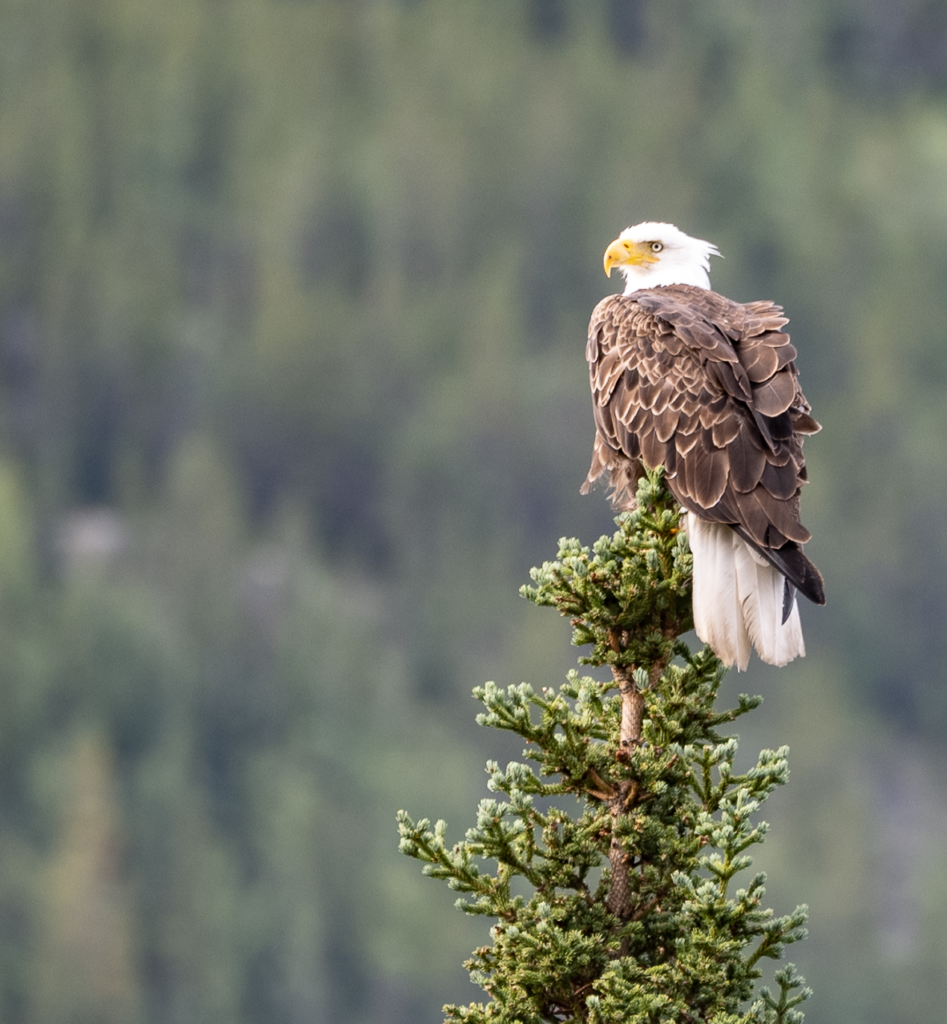
On the day I was driving to Whitehorse, I spotted the stateliest bald eagle perched on a tall conifer tree. He was obviously on alert, looking for prey. He gave me enough time to back up my Plateau TS to a perfect spot on the shoulder of the road directly across from him (absolutely no traffic!), roll down the window, grab the telephoto, focus, and start shooting. He was so kind to take his time looking for prey. But suddenly, he gave me the “Get Ready,” “Get Set,” and “Go” motions. How awesome to capture all three movements. Alas, I only got a blurred bald eagle in full flight though! I am hoping to see more eagles in Alaska, my next stop.
By the way, the Caribou RV Park in Whitehorse is a fabulous place to stay for 3 nights. The European authentic food served, the chocolate croissants flown here directly from France and available every morning at 8:00 am, and the breakfast boxes were to die for!
During my trip, I was able to see other wildlife by visiting the Yukon Wildlife Preserve in Whitehorse. On this preserve tour, we were able to see wood bison, moose, a herd of elk, a two-year-old caribou with huge antlers, stone sheep, and mountain goats; the musk ox were adorable. The two lynxes were not in the mood to come out and say “hi.” And we saw red foxes simply playing with each other on the preserve. I noticed many people coming here just to walk through the preserve to see these animals, and some rented bicycles to do the same. This was a very worthwhile experience to see what one man with a third-grade education and a deep connection to wildlife was able to develop for wildlife in their time of need. I highly recommend visiting this preserve when you are in Whitehorse and taking the formal bus tour; the tour guides are unbelievably knowledgeable and passionate about wildlife!